UX Research

How final
interactions

shape grief

What if the hardest part of losing someone isn't the goodbye, but what was never said?

We listened to nearly 50 people who lost someone unexpectedly to find out how their last moments together shaped their grief.

~50

People Heard

STUDENT PROJECT

STUDENT PROJECT

STUDENT PROJECT

·

·

·

3

designers

TEAM

TEAM

TEAM

2 mo

start to finish

TIME

TIME

TIME

rESEARCH & VISUAL LEAD

The Brief

The Brief

The Brief

Funeral providers help with costs and admin, but grieving families' emotional needs often go unaddressed.

The Question

The Question

The Question

How do final interactions affect grieving for people who lost a loved one unexpectedly?

Process

Process

Process

00123456789
Mapping the pain
We mapped pain points around funerals and grief. Grief had more depth, and people we could actually reach.
00123456789
Finding who it’s for
We started with people who lost a partner, then widened it to anyone who lost someone unexpectedly.
00123456789
Naming our assumptions
We ranked our assumptions by how certain and critical they were, and picked three to test. The big one: is regret about the last words, or about feelings never expressed?
00123456789
Listening with care
I co-designed a 10-day cultural probe (memory jar, petal envelopes, a built-in self-care day), run alongside a survey and interviews.
00123456789
Making sense of it
I ran thematic analysis with the team across all three methods, then regrouped the themes around our three assumptions. That's where the clearest insights came from.
00123456789
Mapping the pain
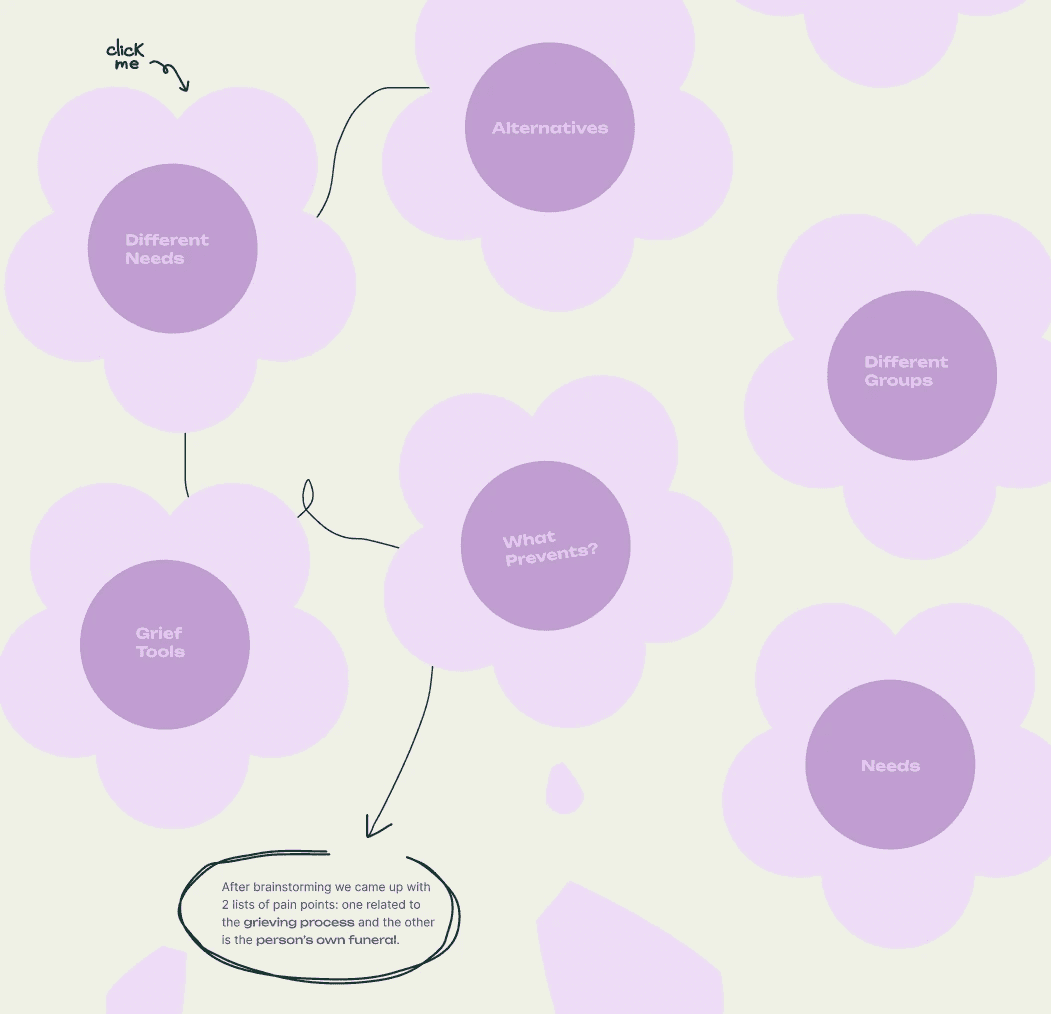
We brainstormed pain points around two topics: planning your own funeral, and grieving someone. Grief had more depth, and more people we could actually reach, so we focused there.
00123456789
Finding who it's for
Splitting people by age, then by personality, felt too vague. A grief forum pointed us to people who lost a partner. When we couldn't reach enough of them in time, we widened it to anyone who lost someone unexpectedly.
00123456789
Naming our assumptions
We mapped our assumptions in two rounds, by how certain and how critical they were, and picked three to test: Does regret change behaviour? Is it tied to the last words, or to feelings never expressed? Do unexpected deaths leave more regret?
00123456789
Listening with care
I co-designed a 10-day cultural probe with a memory jar, petal envelopes and a built-in self-care day, so no one felt overwhelmed. We ran a survey and interviews alongside it, in parallel, to fit the timeline.
00123456789
Making sense of it
I ran thematic analysis with the team across all three methods. Our first themes were too broad, so we went back and regrouped them around the three assumptions. That's where the clearest insights came from.

The Results

WHAT NEARLY 50 PEOPLE TOLD US

#assumptions_confirmed

Regret isn't about the last words!

Regret came from feelings never expressed, not the final words.

#in our samples

Calm goodbyes brought peace. Conflicted ones brought change.

Conflicted endings led to reflection and new ways of showing love.

#surprise

Casual goodbyes became the last ones.

Most final moments were ordinary - a meal, a phone call, a goodbye at the door.

People didn't want a better ending.

They wanted presence.

“Last moment was silent, but I felt his presence and warmth.”
- cultural probe, day 2

Next steps

Where this could go

(student research, not a client -
so here’s what I’d build next)
(student research, not a client -
so here’s what I’d build next)
Where this could lead

Help people express feelings before it’s too late.

Help people express feelings before it’s too late.

Keep the small moments

Collect the everyday memories - a laugh, a habit, a place - not just milestones.

What I'd do differently

Test an idea, not just insights

We stopped at research. Next: prototype one idea and test it with the people we listened to.

Create a free website with Framer, the website builder loved by startups, designers and agencies.